
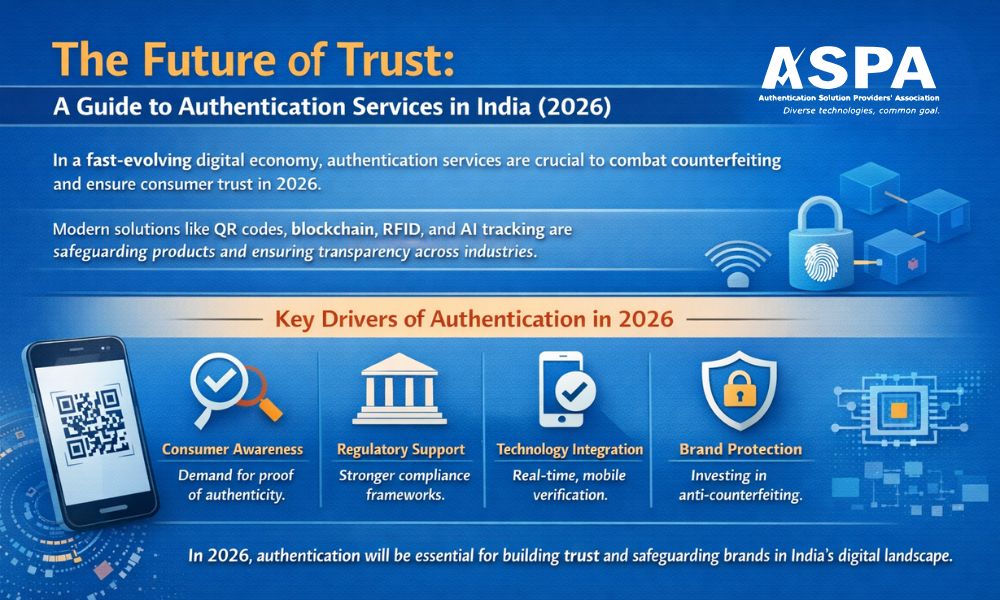
In an era where digital and physical markets are seamlessly blending, Authentication Services in India have shifted from being a luxury for high-end brands to a fundamental necessity for every business. As we navigate through 2026, the rise of “super-fakes”—counterfeit products so sophisticated they deceive even experts—has forced a radical rethink of brand protection. Indian companies are now investing heavily in multi-layered security to safeguard their revenue and, more importantly, the safety of their consumers.
Why Are Authentication Services Becoming Critical in India in 2026?
The Indian market has witnessed a massive digital explosion over the last few years. While this has opened doors for e-commerce growth, it has also provided a digital veil for counterfeiters. Today, authentication services are critical for several reasons:
- Rise of Sophisticated Fakes: Counterfeiters now use generative AI and advanced 3D printing to replicate packaging, making visual identification nearly impossible for the average shopper.
- Consumer Safety: In sectors like pharmaceuticals and agrochemicals, a fake product isn’t just a financial loss; it is a life-threatening risk.
- Digital Trust Economy: As India moves toward a “Digital Trust” model, consumers expect to verify the origin of their products via a quick smartphone scan before making a purchase.
- Regulatory Pressure: The Indian government is increasingly mandating traceability in supply chains to curb tax evasion and ensure quality standards.
How Do Authentication Services Help Indian Brands Fight Counterfeiting?
Authentication services act as a “digital soul” for physical products. By integrating these services, brands can reclaim their market share and build a direct line of communication with their customers.
1. Real-Time Verification
Through unique identifiers like secure QR codes or NFC tags, customers can instantly verify if a product is genuine. This empowers the consumer to act as the first line of defense.
2. Supply Chain Visibility
Authentication isn’t just for the end-user. It allows brands to track a product from the factory floor to the retail shelf. If a “leak” occurs or a counterfeit batch enters the system, the brand can identify the exact point of compromise.
3. Legal and Forensic Support
When brands take legal action against counterfeiters, they need ironclad evidence. Modern authentication tools provide forensic-level data—such as unique chemical markers or microscopic digital fingerprints—that stand up in a court of law.
Which Technologies Are Powering Authentication Services in India Today?
The year 2026 marks the dominance of “Phygital” (Physical + Digital) security. India has become a global hub for these innovative technologies, largely driven by the standards set by the ASPA Global organization.
| Technology | How it Works | Security Level |
| Blockchain Traceability | Creates an immutable ledger of every hand-off in the supply chain. | Extremely High |
| AI-Powered Inspection | Uses AI to detect microscopic imperfections in packaging invisible to the eye. | High |
| DNA Taggants | Molecular-level sequences infused into inks that are impossible to clone. | Forensic |
| Dynamic QR Codes | Each product gets a unique, non-replicable code linked to a secure cloud. | High |
| Holographic OVDs | Optical Variable Devices that change color or shape when tilted. | Overt (Visual) |
The Role of ASPA Global in Shaping the Industry
The Authentication Solution Providers’ Association (ASPA), often referred to in a global context as ASPA Global, is the backbone of the anti-counterfeiting movement in India. As a self-regulated, non-profit body, ASPA has been instrumental in:
- Setting Standards: They ensure that authentication providers adhere to the “Hologram Safety and Security Management Standards.”
- Advocacy and Education: Through reports like the State of Counterfeiting in India, they provide brands with data-driven insights to fight illicit trade.
- Global Collaboration: By working with international bodies like ISO and Interpol, ASPA Global ensures that Indian brands are protected even when they export goods to international markets.
Why Should Indian Businesses Invest in Authentication Services Now?
The cost of inaction far outweighs the investment in security. Indian businesses that delay adopting authentication services face several risks:
“In 2026, a brand’s reputation is its most valuable asset. Once a consumer loses trust due to a counterfeit experience, regaining that loyalty is nearly impossible and significantly more expensive than implementing a security solution.”
- Protecting Brand Equity: Authentication ensures that your brand’s name remains synonymous with quality.
- Data Collection: Every scan by a consumer provides valuable data on where your products are being bought, helping in targeted marketing.
- Reducing Revenue Leakage: By eliminating fakes, brands can see an immediate 10% to 20% increase in legitimate sales.
- Compliance: Meeting the evolving Indian standards for “Digital Product Passports” will soon be a mandatory requirement for many industries.
Conclusion
As India continues its journey toward becoming a global manufacturing powerhouse, the integrity of its products remains paramount. Authentication Services in India are no longer just about labels; they are about creating a transparent, secure, and trustworthy ecosystem. With the guidance of organizations like ASPA Global and the adoption of cutting-edge tech like Blockchain and AI, Indian brands are well-equipped to win the war against counterfeiting.
 ASPA Global | Authentication Services in India