
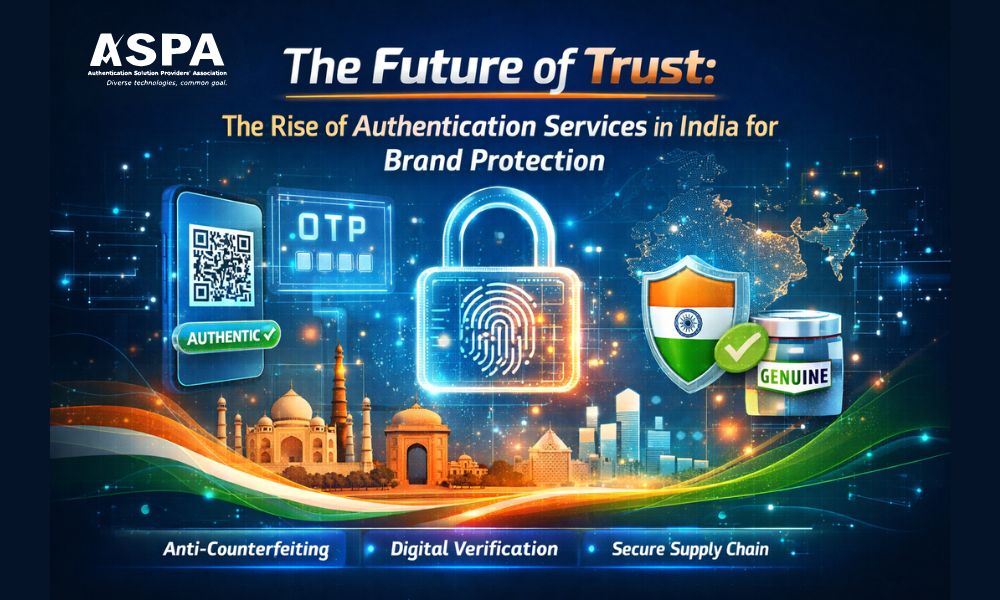
In the rapidly evolving digital landscape of 2026, the safety of products and digital identities has become a paramount concern for both consumers and businesses. Authentication Services in India have emerged as the backbone of trust, bridging the gap between physical goods and digital security. With a market projected to reach over ₹16,500 crore by FY29, India is setting a global benchmark for how a nation can leverage technology to protect its economy and its citizens.
Why Are Authentication Services Rapidly Growing in India?
The surge in demand for authentication services is not a coincidence; it is driven by a unique mix of digital transformation and economic necessity.
- Rise of the “Digital First” Consumer: As e-commerce penetrates every corner of India, the risk of receiving counterfeit or “first copy” products has grown. Consumers now demand tools to verify the legitimacy of their purchases instantly.
- The Aadhaar & UPI Ecosystem: India has built the world’s largest biometric ID system. This infrastructure has paved the way for “Authentication-as-a-Service,” where fingerprint and face scans are now standard for everything from opening bank accounts to collecting government subsidies.
- Post-Pandemic Health Awareness: There is a heightened sensitivity toward the authenticity of medicines and food products. People are no longer willing to take risks with unverified consumables.
- Escalating Counterfeit Losses: It is estimated that the Indian FMCG sector loses nearly 30% of its revenue to fake goods. This massive financial drain is forcing brands to invest heavily in brand protection technologies.
What Are the Latest Authentication Technologies Used in India?
India is moving beyond simple paper stickers to high-tech, multi-layered security features. Here are the technologies leading the charge in 2026:
1. Phygital (Physical + Digital) Solutions
These combine a physical security element, like a 3D Hologram, with a digital one, such as a Secure QR Code. When a customer scans the code, the system verifies the physical location and the specific batch of the product in real-time.
2. Blockchain Traceability
By recording every step of a product’s journey on a decentralized ledger, brands can offer “farm-to-fork” or “factory-to-door” transparency. This is becoming highly popular in the organic food and luxury goods sectors.
3. Biometric Liveness Detection
To prevent identity theft, the latest Indian fintech apps use AI-powered liveness detection. This ensures that the person performing a face scan is a real human and not a photograph or a deepfake video.
4. Smart Inks and Taggants
Invisible to the naked eye, these “covert” features are used by enforcement agencies and brand owners. Specialized scanners can detect unique molecular markers in the packaging to confirm authenticity.
How Are Authentication Services Helping Indian FMCG Brands Fight Counterfeiting?
Fast-Moving Consumer Goods (FMCG) are the most frequent targets for counterfeiters because they are sold in high volumes. Authentication services provide a three-pronged defense:
- Consumer Empowerment: By placing a “Scan to Verify” QR code on a soap wrapper or a shampoo bottle, brands turn every customer into a quality inspector. This builds immense brand loyalty.
- Supply Chain Visibility: Brands can now track “leakage”—when products meant for one region end up in another—or identify exactly where a fake batch entered the distribution network.
- Data-Driven Raids: Modern authentication platforms provide heat maps of where “fail” scans are occurring. If a specific pin code shows multiple scans of a duplicate code, brands can coordinate with local authorities for targeted raids.
The Role of ASPA (Authentication Solution Providers’ Association)
The Authentication Solution Providers’ Association (ASPA) is the global voice of the industry, based in India. Originally formed in 1998, it has evolved into a powerhouse for self-regulation and innovation.
ASPA works closely with organizations like FICCI-CASCADE and international bodies to set the “Hologram Safety and Security Management Standards” (HSSMS). By fostering a network of 80+ member companies, ASPA ensures that Indian brands have access to the world’s best anti-counterfeiting tools. Their recent collaboration with Accenture highlighted that the Indian authentication industry is growing at a CAGR of 11.3%, proving that the fight against the “shadow economy” is gaining serious momentum.
How Do Indian Regulations Impact Authentication Services?
The Indian government has transitioned from recommending authentication to mandating it in critical sectors.
| Regulation / Body | Impact on Authentication |
| RBI Framework (2026) | Mandates Two-Factor Authentication (2FA) for all digital payments, encouraging biometrics over SMS OTPs. |
| FSSAI (Food Safety) | Encourages QR codes on food packaging for traceability and ingredient transparency. |
| PMP (Pharma) | Strict “Track and Trace” requirements for all exported and domestic medicine batches to prevent spurious drugs. |
| Digital India Act | Provides a legal framework for digital identities, ensuring that biometric data used in authentication is protected by law. |
Key Insight: As of April 2026, the RBI’s new guidelines require financial institutions to use “Risk-Based Authentication.” This means if you are making a high-value transaction from an unusual location, the system will automatically trigger a biometric check.
Conclusion
The evolution of Authentication Services in India is no longer just about preventing theft; it’s about building a foundation of trust for the $5 trillion economy. From the village farmer verifying his seeds to the urban professional securing their digital wallet, authentication has become a silent guardian of Indian life. With leaders like ASPA Global driving innovation, India is well-positioned to lead the world in the fight against counterfeiting.
 ASPA Global | Authentication Services in India